Clannad: A Legacy of Music, Language and Culture

Introduction: Bridging Worlds Through Song
Clannad, the pioneering, Grammy award-winning Irish band formed in the early 1970s, holds a unique place in both musical and cultural history. Renowned for blending traditional Irish music with modern elements like jazz, folk, and ambient textures, Clannad did something even more remarkable – they introduced the Irish language to a global audience. Their lyrical commitment to Irish, alongside their ethereal sound and deep-rooted cultural identity, transformed them from a local Donegal band into internationally acclaimed ambassadors for the Irish language and culture.
Gaoth Dobhair Roots: Family, Community, Language
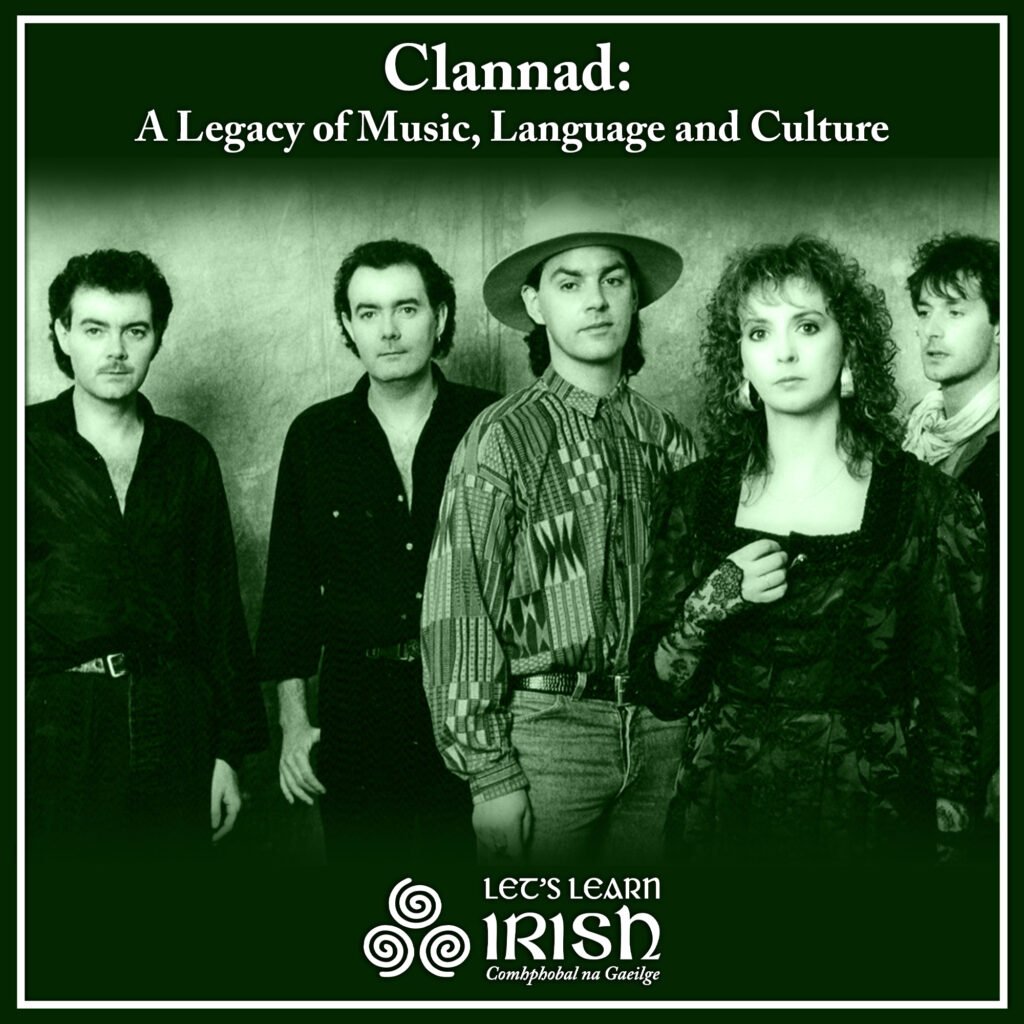
Clannad’s story begins in the Gaeltacht village of Gaoth Dobhair (Gweedore), County Donegal, a stronghold of Irish language and culture on Ireland’s northwest coast. The band’s members – siblings Máire (Moya), Ciarán, and Pól Brennan, along with uncles Noel and Pádraig Duggan – were all raised in this richly Irish-speaking environment. Their home was not just a household but a hub of traditional culture. The family ran Leo’s Tavern, a pub opened by their father Leo Brennan, which hosted ceol, comhrá, agus craic (music, conversation, and fun), giving Clannad a natural and constant exposure to live performance, oral tradition, and linguistic immersion.
Irish was the first language spoken at home, at school, and in the community. The Brennan children grew up not only fluent but culturally literate, absorbing sean-nós singing, Irish folklore, and local music traditions. This environment wasn’t just foundational for their sound—it was essential to their identity. Unlike other Irish artists who might learn the language academically or use it selectively, Clannad’s Irish was organic, lived, and fluent, and their music reflects this authenticity.
Formation and Early Influence
Clannad formed in 1970 and initially performed in local competitions and Irish-language festivals, including the Pan-Celtic Festival. Their name itself – “Clann as Dobhair” or “family from Gweedore” – signalled their roots and linguistic identity from the beginning. Their early albums, including Clannad (1973), Clannad 2 (1975), and Dúlamán (1976), were steeped in Irish tradition, with many songs sung entirely in Irish.
One of their earliest breakthroughs came with the title track of Dúlamán, a vibrant and rhythmically complex rendition of a traditional Irish-language song about seaweed gatherers. The song became a staple and demonstrated that Irish lyrics, often considered too obscure or niche for pop audiences, could be compelling, modern, and emotionally resonant when delivered with Clannad’s musical sophistication.
Innovation and International Success
Clannad’s career took a transformative leap in 1982 when they wrote and performed the haunting theme song for the ITV drama Harry’s Game. Sung entirely in Irish, the piece reached the UK Top 5 and remains the only British chart hit ever sung fully in the Irish language. Its success was not just commercial—it was symbolic. It challenged assumptions about what Irish music and language could be, reaching audiences unfamiliar with both and opening doors for further exploration of Irish culture in media and soundtracks.
That same haunting aesthetic caught the attention of television producers again when Clannad was asked to compose the soundtrack for the HTV/ITV series Robin of Sherwood (1984–1986). The band created an atmospheric and memorable score, blending ancient instrumentation with synthesizers and vocal harmonies.
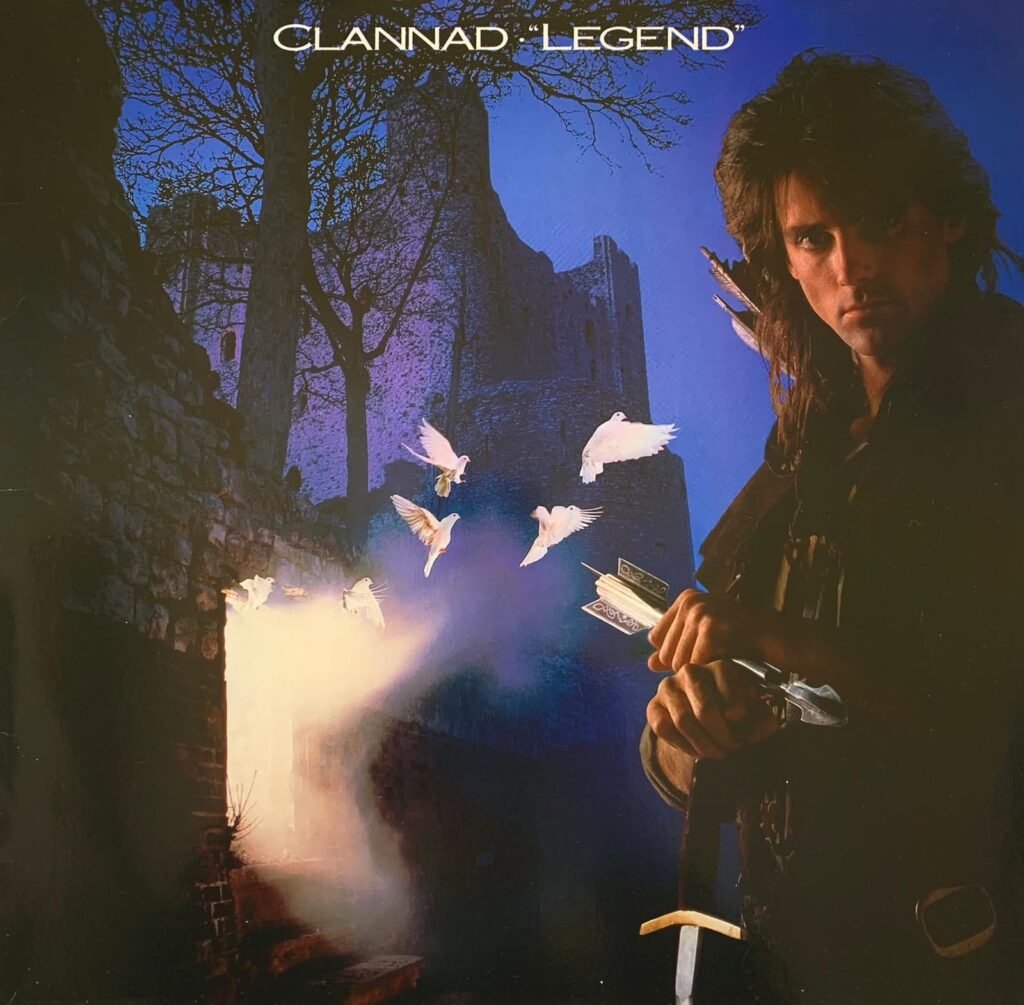
Though the lyrics in this series were mostly in English, the influence of their Irish musical heritage and occasional Irish-language motifs permeated the soundtrack. The theme song, Robin (The Hooded Man), became another of Clannad’s signature pieces. The Legend album, containing the music from the show, earned critical acclaim and helped solidify Clannad’s reputation as one of the most innovative and evocative bands working at the intersection of traditional and modern music. The global popularity of the Robin of Sherwood series introduced their music to millions worldwide.
From that moment on, Clannad’s work straddled two worlds: one deeply tied to traditional Irish identity, and another that embraced global audiences and modern influences. Their later albums such as Magical Ring (1983), Macalla (1985), and Anam (1990) maintained this balance. It is admirable that even as their sound evolved, incorporating synths, atmospheric textures, and English lyrics, they never abandoned Irish. Songs like “Buachaill Ón Éirne” and “Coinleach Ghlas an Fhómhair” remained in their live sets, becoming beloved by fans regardless of their understanding of the language.
It is notable that around this time, Clannad collaborated with an outside musician for the first time ever. Together with Bono, they recorded the track “In A Lifetime”. The song is one of Clannad’s most successful songs and charted in several countries in 1986, including the United States, Ireland, the UK, Italy and Brazil. The accompanying video was shot in their hometown of Gaoth Dobhair. In 2020, In A Lifetime was chosen as the title of their 50th Anniversary career retrospective collection.
Preserving and Promoting the Irish Language
What sets Clannad apart from other musical acts who occasionally use Irish is the frequency, fluency, and artistry with which they do so. Their pronunciation is native, their phrasing musical, and their understanding of the lyrics’ poetic depths profound. In songs like “Caisleán Óir” and “Crann Úll”, they explore love, nature, sorrow, and myth, all through Irish idioms and metaphor. Their recordings have introduced new audiences to traditional songs such as “Dúlamán”, “Buachaill Ón Éirne”, “Crann Úll” and “Na Buachaillí Álainn”.
This artistic authenticity had a ripple effect. Clannad’s success inspired a new generation of Irish musicians, such as Enya (Pól’s sister and former member), Altan, Kíla, Na Fíréin and Kneecap, to see the Irish language not as a limitation but a rich source of inspiration. The success of Clannad has also helped reinforce the revival of the Irish language in film, podcasts and tourism, particularly among diaspora communities. Clannad’s records have found fans across Europe, North America, and Japan. For many listeners abroad, Clannad was their very first encounter with the Irish language, and it wasn’t delivered in a dusty, textbook format, but rather through outstanding musicianship and beauty.
Enduring Legacy and Cultural Contribution
Clannad’s cultural contributions have been recognised with numerous accolades. They won an Ivor Novello Award in 1982 and a BAFTA for their 1984 Legend, the soundtrack for the Robin of Sherwood series. Also, Clannad won the Billboard Music Award for World Music Song of the Year for their track “Rí na Cruinne” in 1992, a Lifetime Achievement Award at the BBC Folk Awards in 2014, and Grammy award for Best New Age Album for Landmarks in 1999. Closer to home, the band were awarded the Freedom of Donegal in 2024.
Notably, the music of Clannad has been preserved in educational curricula, Irish-language classrooms and archives dedicated to traditional arts. Moya Brennan, in particular, has become a cultural ambassador for Irish music and the Irish language, often speaking about the importance of Gaeltacht identity and intergenerational transmission of culture.
Conclusion: A Voice from Gaoth Dobhair to the World
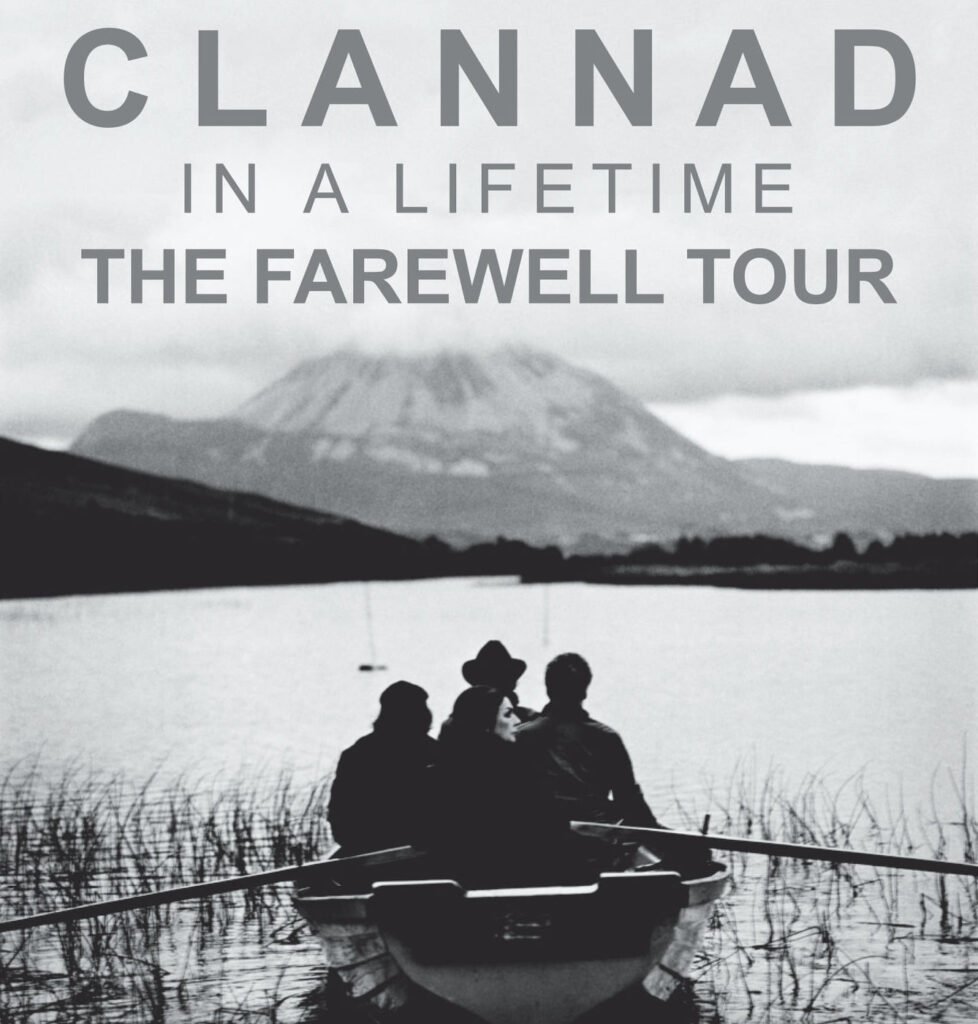
In 2022, Clannad embarked on a farewell tour, celebrating over 50 years of music. Yet their influence is far from over. Their recordings continue to serve as touchstones for those learning Irish, teaching Irish music or seeking deeper engagement with Ireland’s linguistic heritage.
Clannad’s journey, from the small Gaeltacht village of Gaoth Dobhair to the international stage, is a story of how deep cultural roots, when combined with musical innovation, can transform the image of a minority language. Through their poetic lyrics, haunting melodies, and unwavering pride in their linguistic heritage, Clannad have not only kept the Irish language alive—they have made it sing across borders. Their music reminds us that Irish is not a language of the past, but a living, evolving expression of identity, emotion, and art. And for millions, Clannad will always be the first and most unforgettable voice that brought that language into their hearts.
* If you love Irish song and music, you might like to check out our video course, Amhráin na Gaeilge, available to stream for free for all Méabh Members.
Bígí páirteach!
Join the online Irish community at LetsLearnIrish.com.
Follow on social media @LetsLearnIrish.