You Won’t Become Fluent in Irish With Duolingo

Introduction: What is Duolingo?
Duolingo is a popular educational technology company best known for its mobile app that helps people learn languages through short, gamified lessons. The app operates on a freemium model, allowing users to learn for free with ads or pay for an ad-free experience with additional features. Learners can currently access more than 40 language courses.
The Irish language was added to Duolingo in August 2014 and reportedly reached 2.3 million learners within two years (Conradh na Gaeilge, 2016). While this scale is impressive, uptake alone does not equate to successful language acquisition.

The weaknesses of platforms such as Duolingo
1. Lack of authentic interaction
Despite its popularity, Duolingo has notable limitations compared with live online instruction. One major weakness is its limited capacity for authentic interaction. Lessons are individual and response-based, offering little opportunity for spontaneous conversation or negotiation of meaning. Shortt et al. (2023) found that most Duolingo research focuses on vocabulary and grammar gains rather than communicative competence, despite interaction being central to fluency development. Similar complaints are levelled at websites offering multiple ‘mastercourses’, quizzes and downloads, but little in the way of expertise or a range of dialects within an authentic language community.
2. Insufficient grammar explanation
Another limitation in Duolingo is the lack of grammatical clarification. González-Fernández (2024) found that while apps support vocabulary retention, learners in live classes demonstrated stronger listening comprehension and deeper structural understanding due to real-time clarification and adaptive feedback (ibid). Here we see the high value of live instruction with an experienced teacher where we can also benefit from peer learning.
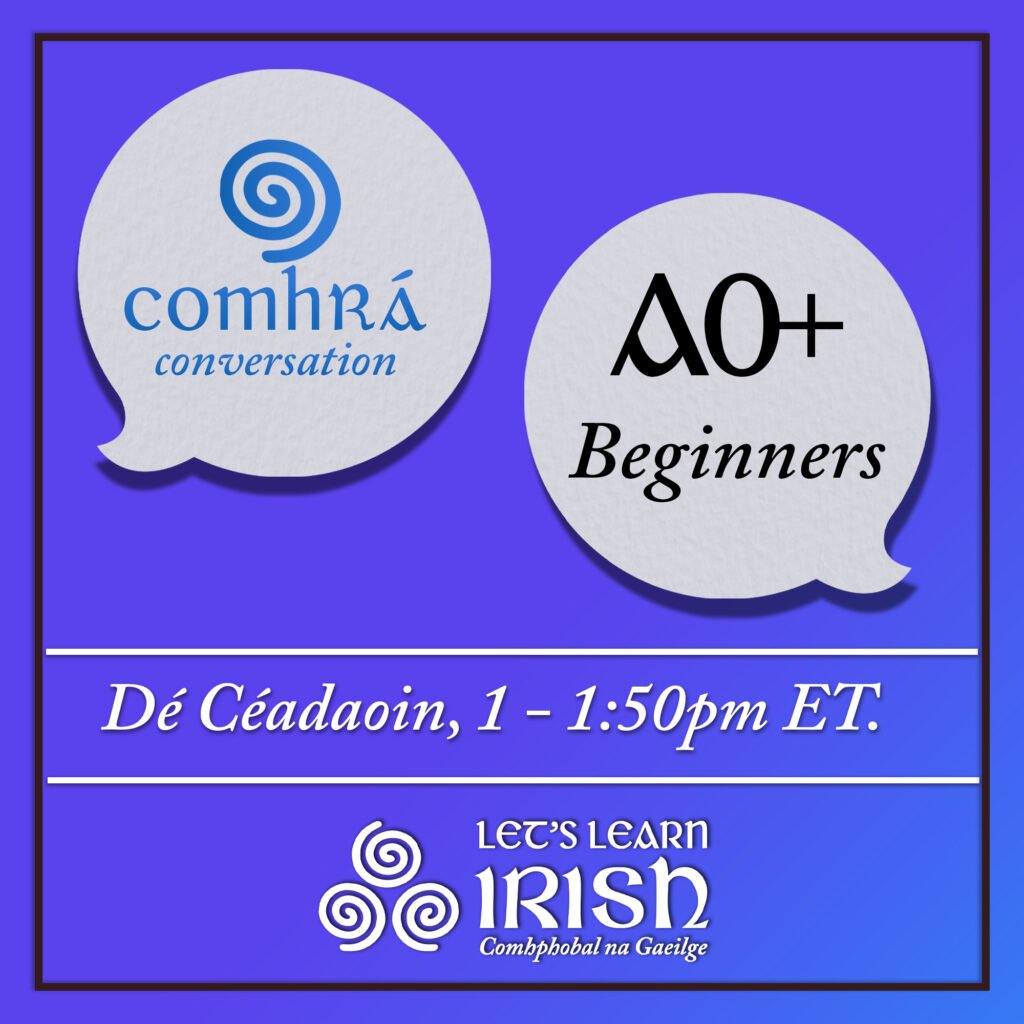

Differentiated classes, comhrá meetings and book club sessions all offer authentic application, group learning and real-time feedback for learners, features sorely missing in learning apps.
3. Minimal real-life application
Duolingo offers limited sociocultural context and real-life context. A 2024 study in the International Journal of Education and Social Science Research found that learners relying solely on apps struggled with idiomatic usage and register, while those in live classes developed stronger pragmatic awareness (IJESSR, 2024). The removal of the user forums in Duolingo has only added to this disconnect. In the end, the time lost on apps and misguided learning attempts cost us time and enthusiasm, whereas live instruction and community interaction accelerates our learning (Zhao and McClure, 2023).
4. Shallow learning
Although Duolingo can increase motivation, gamification can also lead to superficial learning outcomes. Namaziandost et al., (2024) caution that app-based learning often results in fragmented knowledge without structured guidance. Lárionad na Gaeilge at Maynooth University emphasise that effective Irish language education must prioritise communicative competence and language use, not isolated vocabulary learning (Maynooth University, 2024).
5. Unreliable AI content
Recent changes to the Duolingo Irish programme have also raised concerns. Early versions relied on native-speaker recordings, but between 2022 and 2023 these were largely replaced by AI-generated voices. Learners have criticised these voices for inaccurate pronunciation and lack of dialectal authenticity (Genevieve, 2023), and for a language such as Irish, with notable dialectal difference, such a weakness is very significant. This shift aligns with Duolingo’s broader “AI-first” strategy announced in 2025 (Polygon, 2025).
Why the online Irish community works better
The success of the online Irish community is testament to the demand for learner-centred, culturally-grounded interaction focused on communication and confidence building ‘as Gaeilge‘. Live Irish classes and supporting video courses are designed to enhance all language skills (speaking, listening, reading, writing) and provide cultural insights alongside real-time feedback from instructors – elements that help learners connect language use to real world usage. The Let’s Learn Irish platform is informed by academic research into online language communities and sociolinguistic learning, namely the 3C’s Model for Online Language Communities (Connolly, 2021). This model explicitly contrasts with self-paced app learning by fostering ‘Connection, Communication & Collaboration‘ among teachers, mentors and learners worldwide.
Learning Irish is more than memorising words and phrases – it is mastering how to think, interact, and communicate within a culture. For learners of Irish, this is especially true due to its limited availability, endangered status and dialectal diversity. Research in second language acquisition consistently shows that live, teacher-led instruction and interactive communities lead to stronger communicative outcomes than isolated app-based learning (Shortt et al., 2023). By progressing through the CEFR, from A0 to B2 levels, learners can measure their progress in Irish and engage in online events designed to support their continued development. Through engagement with multiple expert teachers and being exposed to the differences between dialects, learners benefit from a more rounded exposure to authentic language usage.

Research into Irish language learning outcomes also suggests that immersive environments play a critical role in achieving fluency. Learners often turn to live classes, conversation meet-ups, and live workshops to supplement app learning precisely because, as mentioned, apps like Duolingo do not provide sufficient practise in spontaneous dialogue and authentic interaction. Limited feedback, lack of grammatical explanation, pronunciation issues and AI content in Duolingo’s Irish course further compound these practical weaknesses.
How Duolingo could be useful for learning Irish
It is generally agreed that Duolingo’s strengths lie mainly in receptive skills. The gamification of the app, with points, levels, lives, and streak tracking, can make learning Irish motivating and accessible. A study in Foreign Language Annals found that Duolingo learners achieved gains comparable to university students in reading and listening, but speaking was not assessed (Vesselinov & Grego, 2022). Apps such as Duolingo are primarily useful as a supplement rather than for instruction. Duolingo’s own Educator Perception Report found that teachers overwhelmingly see language apps as complementary tools rather than replacements for instruction, particularly for speaking and interaction (Duolingo, 2024). If Duolingo and similar apps help you to get started learning Irish and make it fun, then there is certainly merit in that, but know that you are unlikely to achieve your long-term goal of becoming fluent in Irish.
Conclusion: Using Technology Effectively

Technology can open access and build foundational skills for Irish learners, but it cannot replace the socially-embedded interaction of successful language learning. With limited time available, inefficient language learning can quietly undermine progress; app-based study without expert interaction may feel productive, yet often leads to frustration and motivation loss that ultimately demands extra time to correct. Recent research strongly suggests that Duolingo can be effective as a supporting tool rather than a standalone solution. However, app-based learning cannot provide the corrective feedback and sociolinguistic engagement of live class instruction, conversation sessions, workshops or book club meetings. For Irish, a language deeply tied to community, culture and identity, this distinction is especially important – learners benefit most from online environments that promote meaningful use, authentic communication and guided development. Ádh mór le do staidéar!
Related Articles:
Further Reading:
- Connolly, R. (2021) Designing an online language community for Irish learners. Galway: University of Galway.
- Conradh na Gaeilge (2016) Duolingo volunteers honoured. Available at: https://cnag.ie/en/news/890-duolingo-volunteers-honoured-by-president-of-ireland-for-opening-2-3-million-new-doors-to-the-irish-language.html.
- Duolingo (2024) Educator perception report. Available at: https://duolingo-papers.s3.amazonaws.com/reports/Duolingo_whitepaper_language_educator_perception_2024.pdf.
- Genevieve, L. (2023) 365 Days of Irish on Duolingo. Available at: https://lgenevievewrites.com/2025/01/18/365-of-irish-duolingo.
- González-Fernández, B. (2024) Classroom vs app-based learning. Sheffield: University of Sheffield.
- International Journal of Education and Social Science Research (2024) App-based language learning outcomes.
- Maynooth University (2024) Applied research in Irish language learning. Maynooth: Maynooth University.
- Namaziandost, E., et al. (2024) Distance language learning challenges. Available at: ScienceDirect.
- Polygon (2025) Duolingo users are in turmoil over the app’s AI lessons. Available at: https://www.polygon.com/ai-artificial-intelligence/603216/duolingo-ai-language-lessons
- Shortt, C., et al. (2023) Duolingo research landscape review. Frontiers in Education.
- Vesselinov, R. and Grego, J. (2022) ‘Duolingo effectiveness study’, Foreign Language Annals.
- Zhao, Y. and McClure, J. (2023) Exploring learning outcomes, communication, anxiety, and motivation in learning communities: a systematic review, Humanities and Social Sciences Communications. Available at: https://www.nature.com/articles/s41599-023-02325-2.
Bígí páirteach!
Join the online Irish community at LetsLearnIrish.com.
Follow on social media @LetsLearnIrish.