Kneecap – Fenian Album Review: Rap Trio From Belfast Deliver Their Best Record Yet

Album Review: Fenian, by Kneecap
Regular readers will know we’ve been following Kneecap closely – their rise, their self-titled film, the multiple examples of how they have inspired interest in Irish and motivated many to reconnect with their heritage. We’ve even ran a series of popular live courses on the band’s lyrics, and hope to do so again. It is no exaggeration to say that Kneecap have had an extraordinary effect on Irish language learners around the world. For all the column inches devoted to their controversies, however, the most important question has always been the simplest one: can they keep making records people actually want to listen to? Go díreach, an bhfuil an ceol maith? On the evidence of Fenian, the answer is ‘cinnte’ – an unambiguous yes.
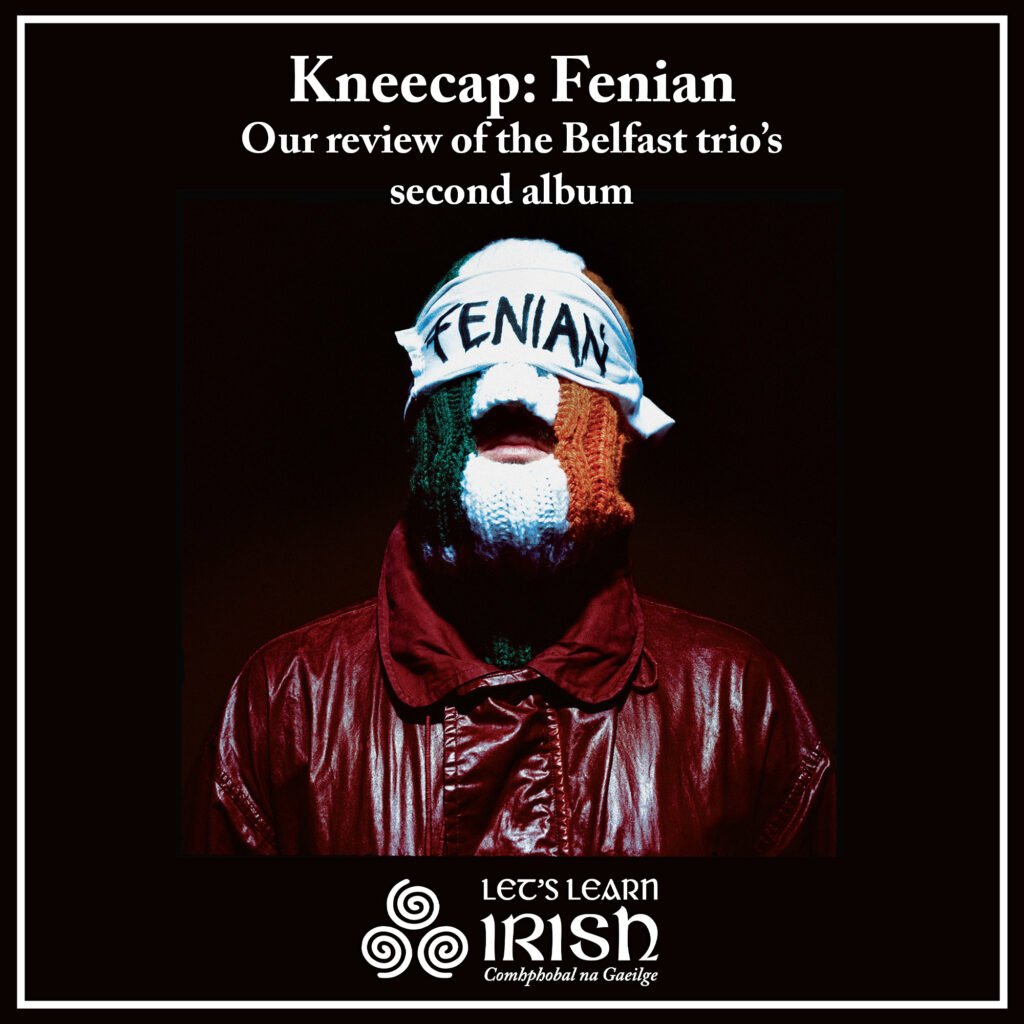
There is a particular kind of courage required to make a second album when the world is watching – not just watching, but waiting. Waiting for you to flinch, to overreach, to let the noise swallow the music. For Kneecap, the three-piece Irish language rap outfit from Belfast, the noise over the past year has been incredibly loud. A terrorism charge against Mo Chara for allegedly waving a Hezbollah flag on a London stage. A Coachella set that cost them their US visa sponsorship. A Glastonbury appearance that Keir Starmer personally described as “not appropriate.” The kind of twelve months that would have most acts retreating behind PR statements and carefully worded apologies. Instead, Mo Chara, Móglaí Bap and DJ Próvaí have responded with Fenian…
Background to the Fenian Album
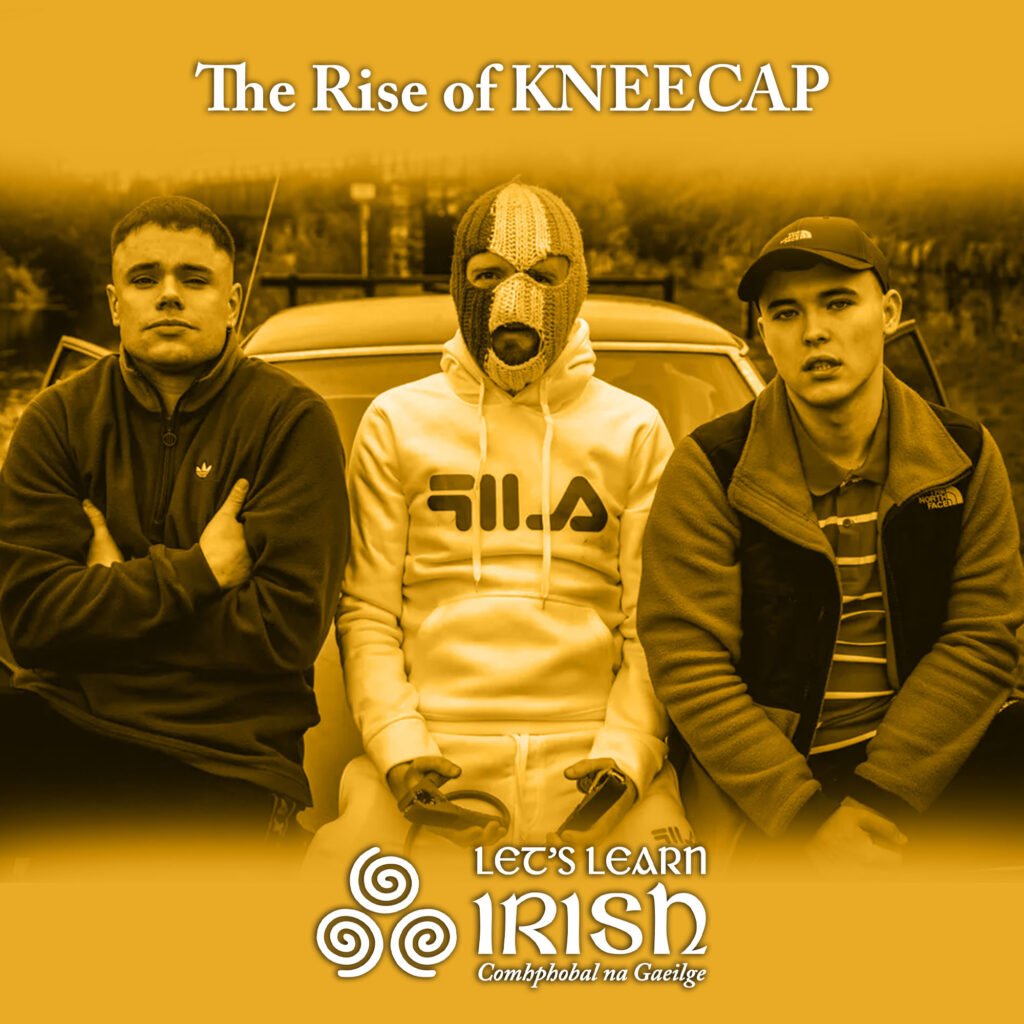
Kneecap have cited gangster rap’s forebears, such as NWA, as a critical influence on their identity as righteous agitators. We can see this in everything they do: in the defiant bilingualism, the balaclava, the gleeful middle finger extended toward an establishment. Since arriving on the scene almost a decade ago, the trio have presented themselves as firebrands, ready to stick it to a system repressing Irish language and culture. They didn’t pardon their Gaeilge. They distrusted the police and screamed “Brits out” at every opportunity.
Frustrated politicians and outraged right-wing pundits who dismissed all of this as mere shock tactics missed an inconvenient truth: Kneecap epitomise how republican sentiment manifests in the post-Good Friday Agreement generation. Young people of their cohort prioritise Irish language rights and migrant rights, see a historic parallel between the oppression of Irish Catholics and Palestinians, and have a yearning to witness the reunification of Ireland. Kneecap don’t just represent that generation – they articulate it, and probably with more precision and wit than any politician currently managing the task.
Ach cad faoin gceol? No musician can hope to change the world without the tunes to back it up. Their barnstorming debut Fine Art worked as a Trojan Horse – all hedonism and chaos on the surface, a serious statement on the Irish condition underneath. The question heading into Fenian was whether they could make a record with the weight to match the hysteria now surrounding them. They could. They have.
Principal work on the Fenian album began in September 2025, with the trio enlisting producer Dan Carey – known for Fontaines D.C., Wet Leg and Foals – to help craft something more mature and musical. The intention was explicit: to create an album built for arena settings, sounding nothing like Fine Art. It was the right call. The sonic palette of Fenian is wider, darker and more assured than anything Kneecap have previously attempted – traversing acid house, trip-hop, dubstep, drum and bass and post-punk sounds.

Fenian, Tracks 1-5
The album opens with Éire go Deo – “Ireland Forever” – a woozy, Massive Attack-esque opener featuring, among others, the voice of the late Rónán Mac Aodha Bhuí and his determined “dorn san aer do na Gaeil” (a fist in the air for the Irish). This opening track feels like a reassertion of the band’s mission to see Irish as a living, breathing language in a vibrant community.
Having honoured past champions of the Irish language, the album quickly transitions to Smugglers & Scholars and the temperature rises sharply. Heavy, ominous industrial hip-hop beats replicate the sound of guns and police sirens, all held together by a dirty bass riff and the duo’s intense, unflinching vocals – a portrait of the real Ireland, shorn of poetry and shamrocks. “Calling me ‘sceimhleitheoir,’ never heard that said before“, Mo Chara sarcastically raps, invoking the Irish word for “terrorist”.
Third track Carnival places the band in a British courtroom – Móglaí Bap telling a judge that “the Brits are at it, repeating history“ – while audible chants of “Free Mo Chara!” ring out from protestors. It’s theatrical and furious, but also pointed.
Palestine, featuring Ramallah-based rapper Fawzi delivering verses in Arabic, is one of album’s high points – a powerful expression of Irish-Palestinian solidarity built around a thought experiment of reverse-colonisation. Checkpoints in Amsterdam. Walls around Paris.
The industrial banger Liars Tale tears down Keir Starmer and the Western imperialist machine of which Britain is a cog, asking why it takes three lads from Belfast to do the jobs that politicians are actively avoiding. “Look mate, the Paddies are back, Is tá deireadh le do ríocht“ (and your empire’s finished).
Title Track: Fenian
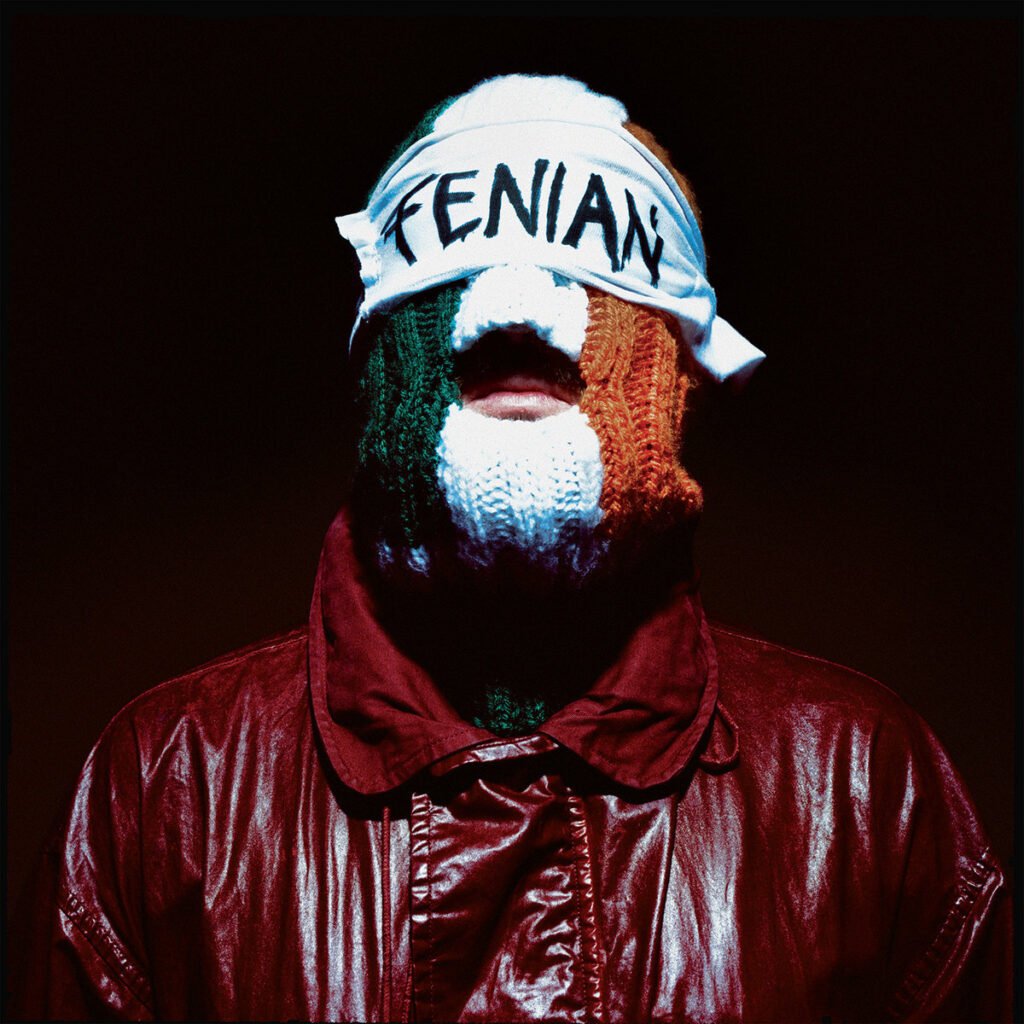
If you want to understand what Kneecap are doing on this album in three minutes and fourteen seconds, start here. The title track, featuring Norwegian indie-pop outfit Casiokids, is the album’s beating ideological heart wrapped in the body of a party anthem. The song reclaims a slur as a badge of pride, delivered with a wink and an irresistible chorus.
The lyrics are a masterclass in Kneecap’s signature bilingual mode – Irish and English tumbling over each other mid-sentence, mid-thought, mid-joke. Móglaí Bap opens the track with an encounter with an Englishman – “Buail mé le Sasannach, teannas san aer” (I met an Englishman, tension in the air) – only to dissolve the tension by simply teaching him everything about the Fianna and watching Ken Loach films together.
The chorus is the track’s masterstroke. By spelling out F-E-N-I-A-N letter by letter – building it incrementally, the trio transform a term of abuse into something communal and joyful. You couldn’t not sing along even if you wanted to, and that’s the point.
The final verses dig deeper into Irish mythology, referencing the salmon of knowledge, and Setanta, the boyhood name of Cú Chulainn, good times in Gaoth Dobhair, and includes the line “Tiocfaidh ár lá, somebody sample that.” It’s funny and defiant and utterly Kneecap – a line that manages to be both a republican rallying cry and also a dig at the music industry.
Fenian, Tracks 7-14
Next comes Big Bad Mo, one of the album’s monstrous highlights. The title is a nod to Mo Chara’s recent controversies, but the track’s real power comes from the interplay between Mo Chara and Móglaí Bap – passing the mic between each other with the couplet-completing precision of Run the Jewels. It captures what makes Kneecap so thrilling live: the sense that the whole thing might fly apart at any moment, but never does.
The drum and bass rush of Headcase warns of the perfect storm of booze, addiction, pressure and no opportunities back home. Track 9, An Ra keeps the groove moving nicely, with plenty of digs against the UK establishment, before the 90s rap bounce of Cold At The Top asks what you’re really left with when the bag is done.
Occupied 6 offers an oppressive portrait of life under the Troubles, shorn of any rose-tinted romance. In these moments, Kneecap remind us of their commitment to giving a voice to their community – not as a means of achieving notoriety, but because they genuinely believe that a crusade in the crosshairs is worth whatever authorities might throw at them.
Gael Phonics is essentially a love letter to the Irish language itself. The song is probably the closest the band will ever come to recording a spoken word lesson in Irish for beginners. Even Duolingo gets blasted (‘Fuck the Duolingo bird, he be talking some shit’). No doubt you’ll find more than a few Irish words and phrases in this song to help you on your language journey. This is followed by Cocaine Hill, a Portishead-inspired journey through Mo Chara’s drug-fuelled insomnia.

Closing out Fenian is the album’s beating human heart, Irish Goodbye:
Nuair a mhothaigh mé mé do lámh mhothaigh mé do ghrá
(When I felt your hand, I felt your love.)
The song is a reflection on Móglaí Bap’s mother’s depression and her death by suicide, and a thank you for the courage she inspired in him:
Na barrógaí is pógannaí a thug tu dom in sa chot
An grá as cuimse is léir ‘sé deacair duitse
Ach leanfaidh me ar aghaidh mar tá barraíocht ar mo liosta.(The hugs and kisses you gave me in the cot
The immense love that is clearly difficult for you
But I will continue because there are too many on my list.)
A lush collaboration with Kae Tempest, it ends with a question that lands like a blow: “How come it’s always the best of us that can’t bear to be?” It is a moment of such raw, unguarded honesty that it recontextualises everything that came before it. Smartly sequenced at the album’s close, it ensures the record ends not with a slogan, but with a more personal, universal message about grief and overcoming.
Verdict
The time has come for Kneecap the rap artists to reassert dominance over Kneecap the headline-makers. Consider the moment seized.
The music of Fenian is topical and urgent. It’s got swagger, fury and gleeful provocation. The album is unashamedly brimming with Irish language and culture, yet all the time retaining the trio’s unmatched knack for having a good time. It is more sophisticated in its song craft, more diverse in its beats, and sharper in its political vision than anything they have done before.
Put all the rage-bait headlines aside and what you’re left with is a solid, progressive and fearless album. Those who persist in writing them off as troublemakers are choosing not to listen. Those who do listen will find one of the most vital, most human, most necessary records of the year – an album that earns its high profile, honours its grief and makes the simple, radical argument that Irish language, identity and community are worth fighting for. Listen here on Spotify.
> Read our article on ‘The Rise of Kneecap’ here.
> Read our review of the Kneecap film here.
Bígí páirteach!
Join the online Irish community at LetsLearnIrish.com.
Follow on social media @LetsLearnIrish.