Dúchas in the Diaspora: How Irish Connected Me with Family and Identity

An Irish Family Story Across Generations
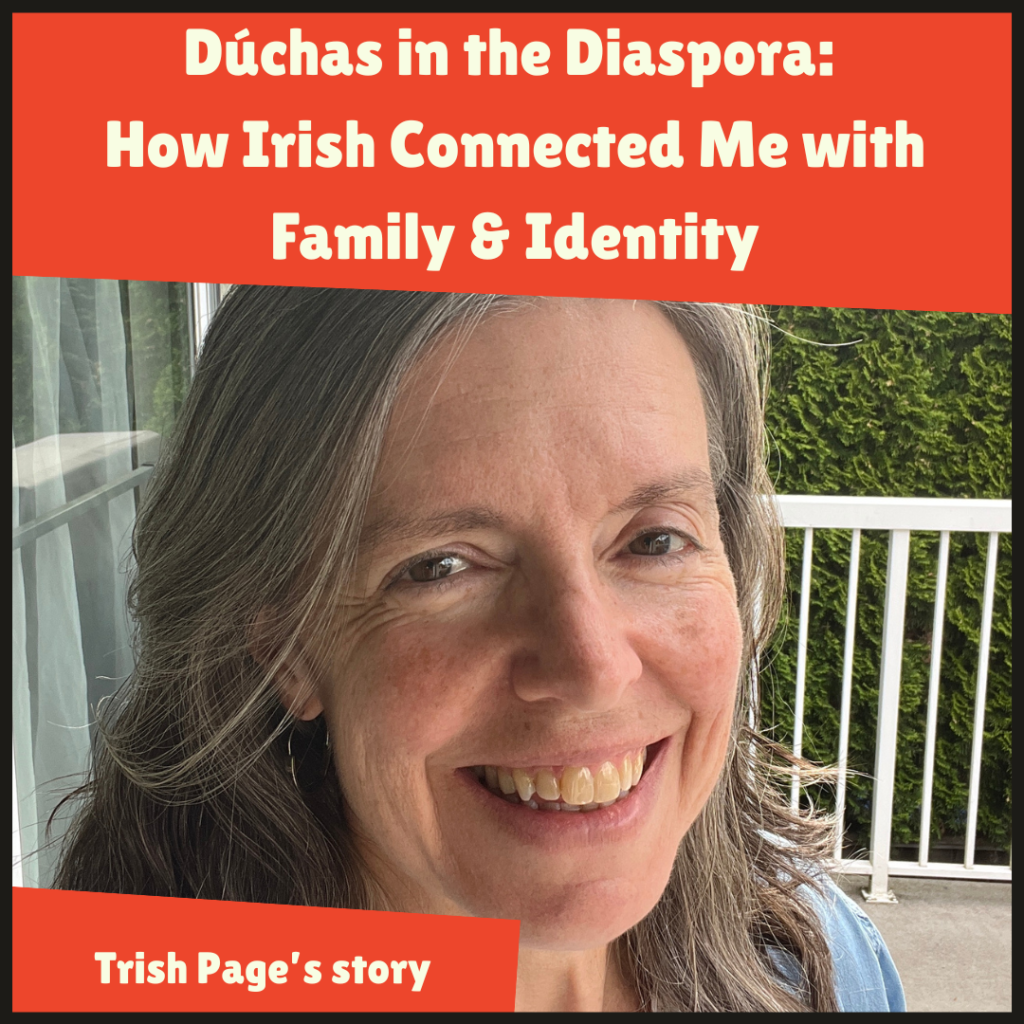
My dad was born in Dublin in 1943. His father was born in Belfast in 1916 into a seafaring family whose home was burned during the upheavals of the 1920s. Because my great-grandfather had a boat, the family escaped to the shipyards and eventually sailed to Dublin, where they rebuilt their lives.
My grandmother, a Kearney, liked to remind us that our family lineage stretched back to the High Kings of Ireland. Whether or not that was entirely true, it gave us a strong sense of connection to Ireland. In 1957, when my father was fourteen, the family emigrated to Canada in search of better economic opportunities. Like so many others, they were economic emigrants.
Growing up, my siblings and I always knew we were Irish. Yet we did not realise how many aspects of our daily lives reflected that heritage. Saturday evenings filled with traditional music, seanfhocail hanging above the fireplace, the rhythms of Hiberno-English in my father’s speech, and Hallowe’en costumes inspired by figures such as the Bean Sí all seemed perfectly normal to us. Only later did I realise how deeply Irish culture had shaped our lives.
Discovering What Had Been Lost
My father completed all of his school examinations through Irish while living in Dublin. Remarkably, he still has the certificates to prove it. Yet after emigrating to Canada, he gradually lost the language.
At the time, there was considerable discrimination against Irish immigrants. While my grandparents maintained connections with the Irish community through the Catholic Church and local organisations, there were few opportunities to preserve Irish as a spoken language.
As a healthcare professional, I have the privilege of working alongside Indigenous colleagues engaged in language revitalisation and decolonisation efforts. Through their work, I came to appreciate how language shapes identity, worldview and belonging.
Watching friends and colleagues reclaim languages that had been suppressed or taken from previous generations made me reflect on my own family history. I began thinking about the Irish my father had lost and the language his parents never had the opportunity to learn. That reflection marked the beginning of my own Irish-language journey.

Taking the First Steps into ‘An Ghaeilge’
Many people caution against language-learning apps, but they can provide an important first step. For me, they made Irish accessible at a time when I was simply curious.
After several months of experimenting with Gaeilge online, an advertisement appeared on my social media feed for an in-person beginners’ Irish class just a few blocks from my home in Vancouver. The algorithms worked in my favour that day.
I nearly did not sign up. What if I did not enjoy it? What if I was terrible at it? Thankfully, with a supportive nudge from my husband, I decided to give it a try. That single decision changed everything.
Finding an Irish-Language Community
Through people I met in that class – many of whom I still learn with today – I discovered the wider online community of Irish learners, including the courses and conversation groups at Let’s Learn Irish. The timing felt perfect. Around the same period, the Irish-language film Kneecap was generating international attention and helping bring Irish-language culture into the mainstream. Suddenly, Irish seemed to be everywhere.
Social media creators were sharing lessons and cultural content. Online communities were growing. More people were discovering that Irish was not simply a school subject or historical curiosity – it was a living language with a vibrant future.
A Different Way of Learning Irish
My father often speaks about how Irish was taught during his school days. Many learners of his generation recall an educational approach focused on rules, correction and discouragement. My experience has been entirely different. From my first class onwards, I encountered teachers and fellow learners who encouraged participation, curiosity and experimentation. Nobody expected perfection. Mistakes were simply part of the process. That positive environment transformed how I viewed language learning.
My colleagues at work are often fascinated when they discover I am learning Irish. Some did not even realise Irish was still spoken. They now see me signing off emails in Irish or reading books by Manchán Magan during lunch breaks. Many have become curious about Irish history, culture and the language itself.
Advice for New Irish Learners
If I could offer one piece of advice to someone starting out, it would be this: listen. There has never been a better time to learn Irish online. Resources such as TG4, the How to Gael Podcast and music from groups such as Kneecap and Chasing Abbey provide endless opportunities to hear authentic Irish.
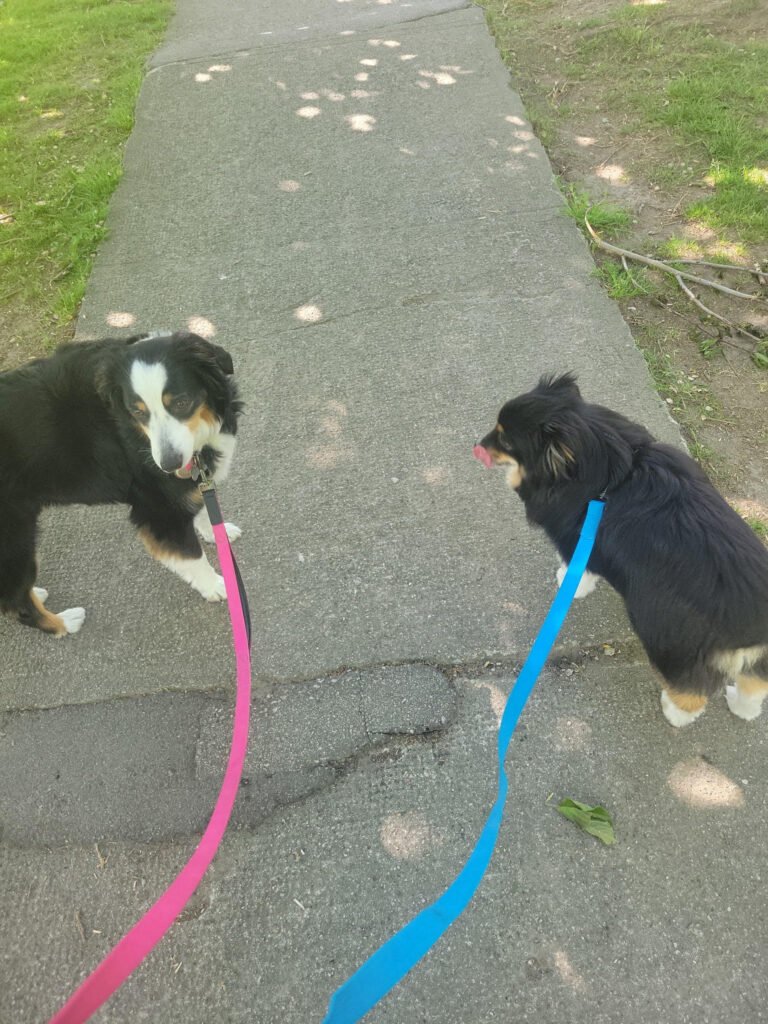
For those of us living far from Ireland and the Gaeltacht, surrounding ourselves with the sounds of the language is essential. Find resources that suit your interests. If one explanation does not make sense, another teacher or creator may present the same idea in a way that clicks. Most importantly, speak whenever you can. I regularly practise with my dogs, who now understand commands such as suigh, fan, tar anseo and bí ciúin. They may not answer back, but they are patient listeners.
An Unexpected Gift
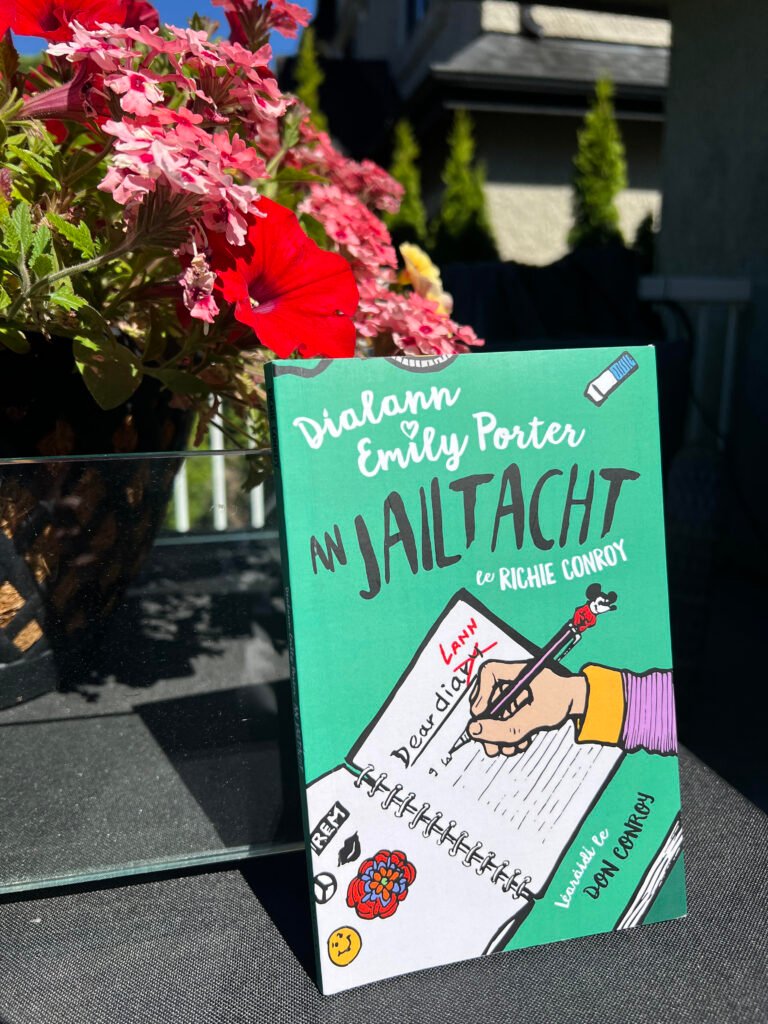
As I write this, I am sitting on my back deck in Vancouver. An Irish-language book rests on the table beside me. TG4 plays softly in the background. Moments like this remind me of the remarkable turns life can take.
My ancestors lost Irish through emigration, circumstance and the pressures of assimilation. More than a century later, I find myself learning that same language from a thriving global community of teachers, learners, and enthusiasts. Learning Irish has helped me connect family stories, cultural traditions and personal identity in ways I never expected. It has brought distant parts of my life into focus and revealed connections that were always there, waiting to be discovered.
For that opportunity, and for the community that makes it possible, I remain deeply grateful. Buíochas le Dia.
Bígí páirteach!
Join the online Irish community at LetsLearnIrish.com.
Follow on social media @LetsLearnIrish.