The Jailtacht: How Republican Prisoners Resurrected the Irish Language

Introduction: From Cages to Classrooms
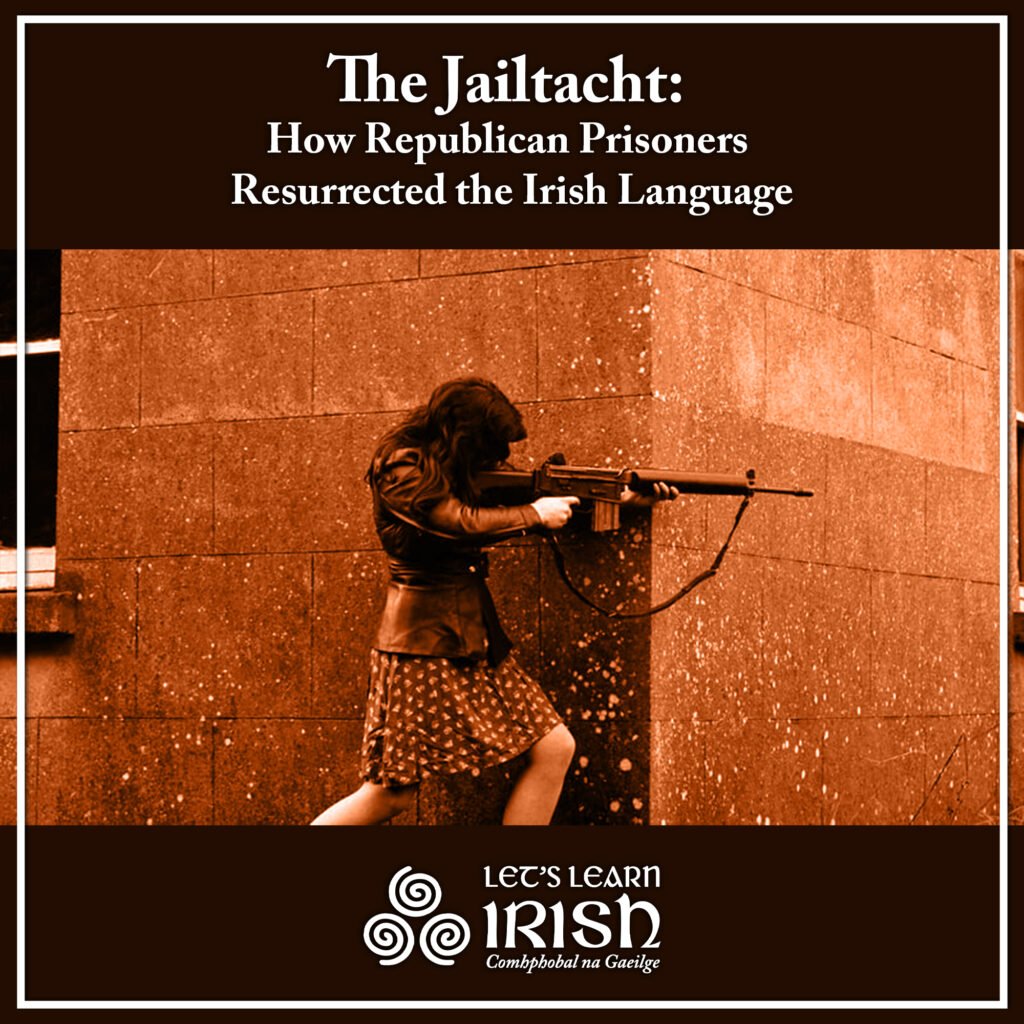
In the most unlikely of places, behind the walls of some of the North’s most notorious prisons, the Irish language was not only kept alive but radically transformed. From the 1970s to the present day, Irish republican prisoners defied institutional suppression to learn, teach and promote Irish, turning prison cells into classrooms and silence into cultural revival. This linguistic resistance in the so-called ‘Jailtacht’, born in the harsh conditions of internment and protest, had a dramatic impact beyond the prison walls, ultimately influencing attitudes toward the Irish language across Ireland and further afield. These claims and more are made in Diarmait Mac Giolla Chriost’s publication, Jailtacht: The Irish Language, Symbolic Power and Political Violence in Northern Ireland, 1972-2008.
Language Behind Barbed Wire (1972–1976)
Between 1972 and 1976, the internment policy of the British government saw thousands of Irish republicans imprisoned in Long Kesh, colloquially known as “the Maze.” These makeshift compounds were initially granted “Special Category Status”, allowing prisoners to wear their own clothes, organise themselves according to paramilitary affiliation, and participate in educational activities.
During this time, the Irish language took root. Prisoners, some with limited school-level Irish or none at all, began studying the language in earnest. Irish classes formed part of a broader self-organised curriculum. Teaching was informal yet structured, often involving Gaeltacht-style immersion. The cages became crucibles of linguistic dedication: learners advanced through ranks, earning badges like the Fáinne Glas to mark proficiency.
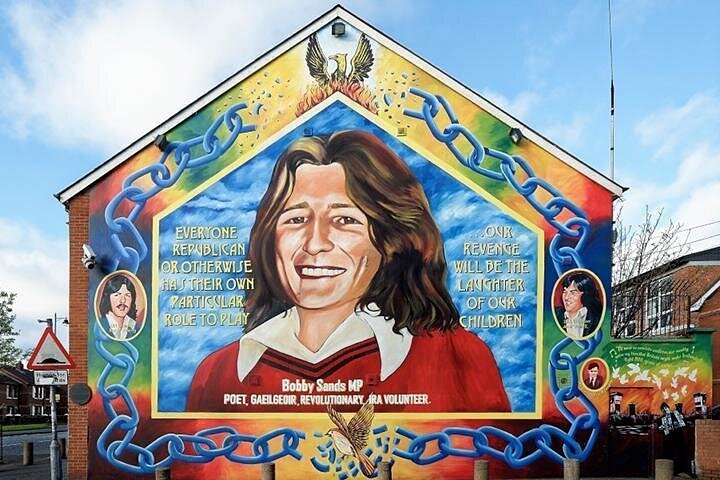
Inmates such as Séanna Walsh and Bobby Sands, inspired by the political and cultural significance of the language, became fluent. The establishment of “Gaeltacht huts”, designated spaces where only Irish was spoken, marked a significant ideological turn, transforming Irish into a tool of resistance and identity.
The Dirty Protest Years (1976–1981)
The situation changed dramatically in 1976 when Special Category Status was revoked. Newly convicted prisoners were treated as criminals, required to wear prison uniforms, and subjected to harsh regimes of control. In response, Irish republican prisoners launched the blanket protest, later escalating into the dirty protest and two major hunger strikes.
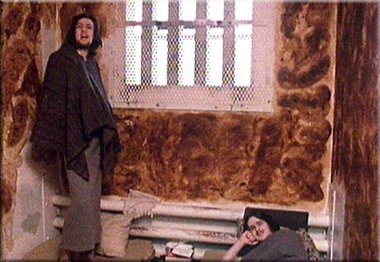
Communication was restricted; Irish language materials were banned. Despite this, Irish continued to flourish underground. H-Block prisoners found ingenious ways to teach and learn the language without books, chalk, or classrooms. As Laurence McKeown explained, inmates would become teachers as soon as they achieved a higher level of fluency, creating a chain of linguistic transmission across prison walls.
In these conditions, the term Jailtacht, a portmanteau of jail and Gaeltacht, was coined to describe the radical new environment in which Irish was not merely studied, but used exclusively in parts of the prison. It was an act of cultural defiance: refusing to speak English, even in solitary confinement, and smuggling grammar lessons between blocks through sympathetic clergy and hidden messages.
The Post-Hunger Strike Period (1981–1998)
The 1981 hunger strikes were a watershed in both the political and cultural life of Irish republicanism. The image of Bobby Sands, fluent in Irish and committed to cultural as well as political struggle, became iconic. In the aftermath, the strategy shifted from protest to a more calculated and sustained form of engagement with both language and politics. Prisoners began to embrace structured, long-term educational initiatives. Irish classes became part of daily routine in the H-Blocks, even as restrictions persisted. The cultural resistance of the Jailtacht became embedded in prison life, and language became a unifying ethos for the community.
As the number of Irish-speaking prisoners grew, they created their own Irish-language materials – dictionaries, grammar guides, and even literary work – often written by hand and copied among inmates. A unique form of Irish, “Jailic,” developed with its own slang, rhythm, and oral style, shaped by the peculiar constraints and creativity of the prison environment. Language learning was no longer just personal – it was political, a conscious act of reclaiming one’s own language as a crucial act of anti-colonial resistance.
Some H-Blocks, like H-5 and H-8, became linguistic enclaves where Irish was spoken exclusively. Prisoners structured daily life in Irish, including political education and cultural classes. Discipline was strict – those who broke the Irish-only rule could be removed from the Jailtacht wing. According to ex-prisoner accounts, inmates could be promised fluency in six months due to the intensity of the immersion. This not only elevated the status of the language inside the prison but redefined it as a symbol of resistance, intellect and unity. The strategy laid the groundwork for language-based activism after release, demonstrating how Irish could serve both as a cultural weapon and a vehicle for long-term political transformation.
Irish Language and Political Legacy (1998–Present)
The 1998 Good Friday Agreement not only marked the beginning of a new political chapter in the North but also created opportunities for a broader cultural reimagining. Many former republican prisoners emerged from jail not just politically active but linguistically empowered. They carried with them a strong commitment to promoting Irish as a living language of the community. The knowledge and confidence they gained behind bars translated into a cultural resurgence in their home neighbourhoods, particularly in West Belfast and Derry.
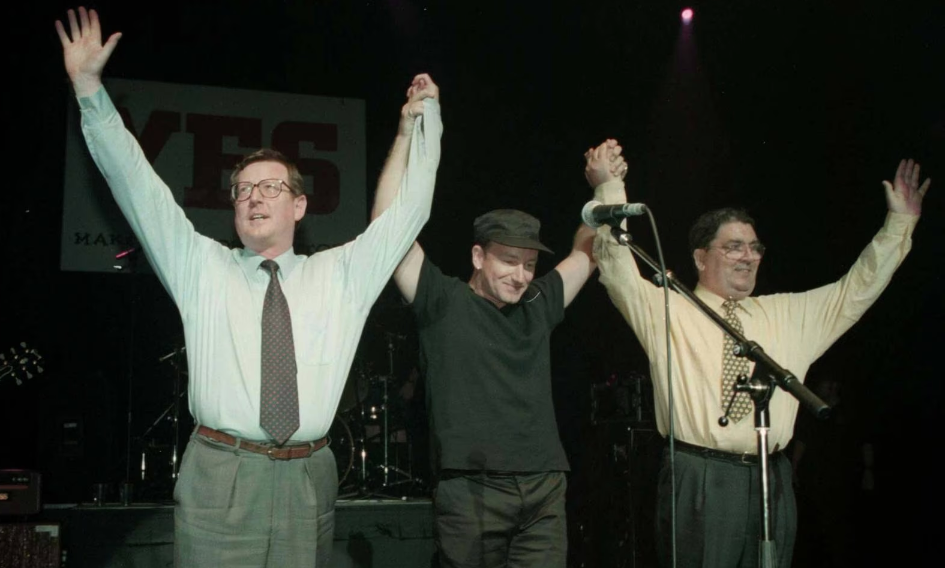
Ex-prisoners became central figures in the growth of Irish-medium education, founding or supporting naíscoileanna (Irish-language preschools) and gaelscoileanna (Irish-medium schools). They helped establish Irish-language community centres and organisations like Cumann na Fuiseoige, and were instrumental in campaigns for language rights and equality. Their influence also extended to public policy—some former prisoners took up roles in Foras na Gaeilge, the North-South language body, where they helped shape official policy and funding streams for Irish language initiatives.
The Irish language, once criminalised and suppressed within prison walls, was now being commodified in new and surprising ways. Visitors to West Belfast seeking insight into the Troubles often encountered Irish language murals, signage, and guides fluent in the tongue learned in the H-Blocks. The cultural power of the Jailtacht had crossed over into civic life, challenging traditional nationalist narratives and drawing new attention to the political dimensions of language revival. Yet, tensions remained. Debates in the Belfast Assembly about the use of Irish, and ongoing resistance to an Irish Language Act, revealed that the language remained a contested symbol. Nevertheless, its expanded public visibility, particularly in urban working-class areas, owes much to the vision and commitment of those who first embraced it in prison cells, often with no resources but a fellow learner, a whispered word, and sheer determination.
Conclusion: Language as Symbolic Power
The story of the Irish language among prisoners in the North is a striking example of language as symbolic power. Against all odds, republican prisoners reclaimed a language associated with loss and decline and transformed it into a weapon of cultural resilience and political identity. From whispered vocabulary lessons in solitary confinement to full speeches ‘as Gaeilge’ on the floor of Stormont, Irish has travelled an extraordinary path.
The Jailtacht is not merely a historical curiosity – it is a reminder that language can both empower and liberate, even in the darkest of places. It shows how cultural revival can be born from struggle, and how resistance will often find expression not only through protest and hunger strikes, but also through conjugations and conversation.
Related Articles:
- The Process of Decolonization.
- An Gorta Mór and the Irish Language.
- 10 Places to Visit in the Gaeltacht.
Further Reading:
- Mac Giolla Chríost, D. (2012) Jailtacht: The Irish Language, Symbolic Power and Political Violence in Northern Ireland, 1972–2008. Cardiff: University of Wales Press.
- Mac Ionnrachtaigh, F. (2013) Language, Resistance and Revival: Republican Prisoners and the Irish Language in the North of Ireland. London: Pluto Press.
Bígí páirteach!
Join the online Irish community at LetsLearnIrish.com.
Follow on social media @LetsLearnIrish.